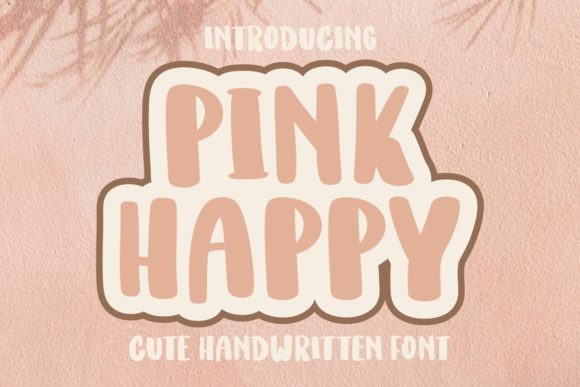
Pink Happy
When you are designing a project that needs to convey joy, warmth, or a touch of playful personality, the right typeface can make all the difference. Pink Happy is a cute, thick lettered and charming display font designed specifically to bring that whimsical energy to your work. It is quirky enough to stand out but legible enough to remain functional in many contexts. Whether you are a seasoned graphic designer looking for a unique accent or a small business owner trying to create an inviting brand identity, this font offers a distinct visual voice.
However, selecting a display font like Pink Happy requires more than just liking how it looks on a screen. There are practical considerations regarding usage, pairing, and licensing that often get overlooked. Understanding these nuances ensures that your design remains professional, effective, and legally sound. Below, we explore common pitfalls when using this typeface and provide actionable advice to help you integrate it confidently into your projects.
Understanding the Visual Personality
Pink Happy is described as whimsical and a bit quirky, with a thick, bold structure that commands attention. This makes it an excellent choice for headlines, logos, posters, and social media graphics where you need to grab the viewer’s eye immediately. The charm lies in its irregularities and rounded edges, which give it a hand-drawn, approachable feel. Unlike rigid, geometric sans-serifs, Pink Happy feels human and friendly.
Many creators are drawn to this font because it instantly elevates the mood of a design. Adding it confidently to your projects will likely result in visuals that feel more engaging and less sterile. However, because it is a "display" font, it is not intended for long blocks of body text. Its thick strokes and unique character shapes can become difficult to read when scaled down or used in dense paragraphs. Recognizing its primary role as a headline or accent font is the first step in using it effectively.
Common Mistakes in Font Pairing
One of the most frequent errors designers make with distinctive fonts like Pink Happy is failing to pair them correctly. Because Pink Happy has such a strong personality, it can easily overwhelm other elements if not balanced properly. A common mistake is pairing it with another decorative or script font. This creates visual clutter and confuses the hierarchy of information, making the design look chaotic rather than curated.
To avoid this, choose a neutral, clean typeface for supporting text. Simple sans-serifs or classic serifs work best because they provide a calm backdrop that allows Pink Happy to shine. For example, if you are designing a bakery menu, use Pink Happy for the title "Sweet Treats" but pair it with a straightforward sans-serif like Helvetica or Open Sans for the ingredient lists. This contrast ensures readability while maintaining the whimsical theme. Remember, the goal is harmony, not competition between typefaces.
The Danger of Overuse
Another pitfall is overusing Pink Happy throughout a single design. While it is tempting to apply the font to every element to maintain consistency, doing so can dilute its impact. If everything is loud, nothing stands out. Reserve Pink Happy for key focal points, such as main headings, call-to-action buttons, or logo lockups. Use simpler fonts for subheadings and body copy. This strategic application preserves the specialness of the font and guides the viewer’s eye to what matters most.
Licensing and Usage Rights
Before downloading or purchasing Pink Happy, it is crucial to understand the licensing terms. Many users assume that a font available online is free for all uses, including commercial projects. This is rarely the case. Display fonts often come with specific licenses that dictate how they can be used, whether for personal projects, client work, or merchandise.
- Personal Use: Some licenses allow free use for non-commercial projects, such as personal blogs or greeting cards for friends.
- Commercial Use: If you are using the font for a business, advertisement, or product packaging, you typically need to purchase a commercial license.
- Extended Licenses: For high-volume print runs or merchandise (like t-shirts), an extended license may be required.
Failing to check these details can lead to legal issues and unexpected costs. Always review the end-user license agreement (EULA) provided by the font creator. If the information is unclear, contact the foundry directly. Investing in the correct license protects your business and respects the intellectual property of the designer.
Evaluating Legibility and Scalability
While Pink Happy is charming at large sizes, its legibility can suffer when scaled down. Thick lettering can cause characters to bleed into each other if the size is too small or if the line spacing (leading) is insufficient. This is particularly problematic for web design, where users may view content on various devices with different screen resolutions.
To ensure your designs remain clear across all platforms, test the font at multiple sizes. Check how it looks on mobile screens versus desktop monitors. If the text becomes blurry or hard to distinguish, consider reducing the weight or switching to a simpler font for smaller sizes. Additionally, pay attention to kerning—the space between individual letters. Display fonts often have custom kerning pairs that look best when left alone, but manual adjustments might be necessary to prevent awkward gaps or collisions in your specific layout.
Color and Context Considerations
The name "Pink Happy" suggests a vibrant aesthetic, but the font itself is usually black in its default state. Designers sometimes make the mistake of assuming the font color is fixed. In reality, you can change the color to match your brand palette. However, keep in mind that thick fonts absorb more ink in print and require higher contrast in digital formats to remain readable. Using a light pink background with a white version of the font may result in poor visibility. Always ensure sufficient contrast between the text and its background to maintain accessibility standards.
Furthermore, consider the context of your message. Pink Happy is perfect for celebratory events, children’s products, or lifestyle brands. It may not be appropriate for formal corporate reports, legal documents, or serious news outlets. Aligning the font’s personality with your brand’s tone is essential for effective communication. If your brand is serious and authoritative, Pink Happy might undermine your credibility. If your brand is fun and approachable, it will enhance your message.
Final Checklist Before You Design
Before finalizing your design with Pink Happy, run through this quick checklist to ensure quality and compliance:
- License Verification: Confirm you have the right to use the font for your specific project type.
- Pairing Balance: Ensure the supporting text is simple and does not compete with the display font.
- Scalability Test: View the design on mobile and desktop to check for legibility issues.
- Contrast Check: Verify that the text stands out clearly against the background.
- Tone Alignment: Confirm that the whimsical nature of the font matches your brand voice.
By avoiding these common mistakes and approaching Pink Happy with intention, you can create designs that are not only visually appealing but also functional and professional. Add it confidently to your projects, and you will love the results. The key is to let the font do what it does best: bring a little happiness and charm to your audience’s experience.