The Playful Power of Boldchild: Why This Display Font Is Taking Over Creative Projects
In the vast landscape of digital typography, finding a typeface that strikes the perfect balance between professional polish and approachable charm can feel like searching for a needle in a haystack. Most display fonts lean heavily into one direction: either starkly corporate or excessively decorative. However, there is a growing trend among designers, educators, and small business owners to embrace a font that refuses to be categorized simply as "serious" or "fun." Enter Boldchild, a typeface that has quietly become a favorite for those looking to inject personality into their visual communications without sacrificing readability.
This article explores why Boldchild is more than just a quirky choice for greeting cards. It examines the design philosophy behind the font, its versatility across various mediums, and how it serves both casual creators and serious professionals who understand the power of friendly branding.
Understanding the Design Philosophy
To appreciate Boldchild, one must first look at what makes a display font effective. A display font is not meant for long blocks of body text; rather, it is designed to grab attention at large sizes. The challenge lies in maintaining legibility while conveying emotion. Boldchild achieves this through a specific set of design characteristics that prioritize human connection over rigid geometry.
Characteristics That Define the Typeface
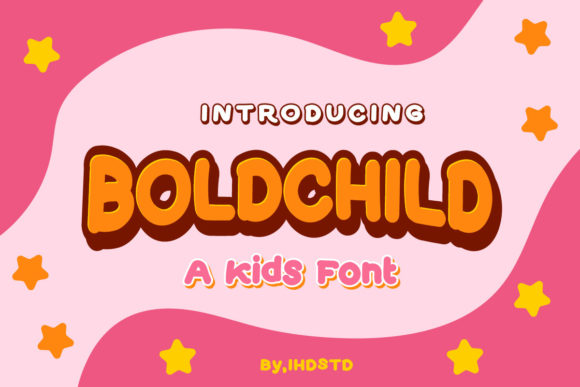
- Rounded Edges: Unlike many modern sans-serif fonts that feature sharp, geometric corners, Boldchild utilizes soft, rounded terminals. This subtle curvature reduces visual aggression, making the text feel inviting and safe.
- Consistent Weight: As the name suggests, the strokes are bold and uniform. This heaviness ensures that the letters stand out clearly against busy backgrounds, whether on a website header or a printed poster.
- Childlike Proportions: The letterforms often mimic the slightly irregular, open structures found in early handwriting. This does not mean the font looks amateurish; instead, it evokes a sense of nostalgia and authenticity.
These features combine to create a visual tone that is inherently friendly. When a user encounters Boldchild, their subconscious association is with positivity, creativity, and ease. This psychological effect is crucial for brands aiming to lower barriers to entry and build trust quickly.
Who Uses Boldchild and Why?
While the name might suggest a niche audience limited to children’s products, the reality is far broader. The appeal of Boldchild spans multiple industries because it solves a common problem: how to appear accessible without losing authority.
Educators and Content Creators
In the education sector, engagement is key. Teachers and instructional designers use Boldchild for worksheets, classroom signage, and digital learning modules. The font’s clarity helps younger students decode words easily, while its playful nature keeps older students engaged. For online course creators, using Boldchild in video thumbnails or slide headers can significantly increase click-through rates by signaling that the content is easy to digest.
Small Business Owners and Marketers
For startups and local businesses, standing out in a crowded market requires a distinct voice. A bakery, a boutique toy store, or a wellness coach might find that traditional serif fonts feel too cold, while standard sans-serifs blend into the background. Boldchild offers a middle ground. It allows these businesses to craft a brand identity that feels personal and community-oriented. Imagine a coffee shop menu where the item names are set in Boldchild; the experience immediately feels warmer and more welcoming than if they were in a sterile Helvetica.
Digital Designers and UI/UX Specialists
Even in the tech world, where minimalism often reigns supreme, there is a movement toward "soft UI" and human-centered design. Boldchild is increasingly used in app interfaces for lifestyle, parenting, and creative tools. It breaks the monotony of grid-based layouts and adds a layer of emotional intelligence to user interactions. By using this font for call-to-action buttons or welcome messages, designers can reduce user anxiety and encourage exploration.
Practical Applications Across Mediums
The versatility of Boldchild is one of its strongest selling points. Because it is a display font, it performs exceptionally well in contexts where text needs to act as an image itself. Below are some of the most effective ways to incorporate this typeface into your workflow.
Print Collateral and Crafts
One of the original use cases for Boldchild is in physical crafts. Whether you are using a cutting machine like Cricut or Silhouette, or simply hand-lettering signs, the bold weight of the font translates beautifully to vinyl, cardstock, and wood. It is particularly popular for:
- Greeting Cards: The font’s inherent friendliness makes it ideal for birthdays, holidays, and thank-you notes.
- Party Decorations: Banners, cupcake toppers, and table numbers benefit from the celebratory vibe the font provides.
- Personalized Gifts: Engraved items or custom mugs often look more premium when paired with a clean, bold typeface that doesn’t require intricate detailing.
Digital Presentations and Social Media
In the age of short attention spans, static images need to communicate instantly. Boldchild excels in social media graphics, such as Instagram quotes or Pinterest pins. Its high contrast ensures that text remains readable even on small mobile screens. Furthermore, in PowerPoint or Keynote presentations, using Boldchild for title slides can set a tone of enthusiasm and openness, helping to capture the audience’s interest from the very beginning.
Branding and Logo Design
While full logos made entirely of Boldchild might lack subtlety, it is a powerful tool for wordmarks in specific industries. A logo for a children’s clothing line, a creative agency, or a podcast about personal growth can leverage the font to instantly signal its niche. The key is to pair it with complementary elements—such as soft colors or simple icons—to maintain balance.
Considerations for Effective Usage
Despite its many advantages, Boldchild is not a one-size-fits-all solution. To use it effectively, designers must understand its limitations and how to pair it with other typographic elements.
Pairing Strategies
Because Boldchild is visually dominant, it works best when paired with lighter, more neutral typefaces for body text. A simple sans-serif like Open Sans or a classic serif like Georgia can provide the necessary contrast. The heavy, playful nature of Boldchild anchors the design, while the secondary font handles the detailed information. Avoid pairing it with other display fonts, as this can create visual clutter and compete for the viewer’s attention.
Contextual Appropriateness
It is essential to consider the context in which the font is used. While Boldchild is excellent for creative and educational projects, it may not be suitable for formal legal documents, financial reports, or high-end luxury branding. In these contexts, the font might be perceived as unprofessional or immature. Always ask yourself: Does this font align with the message I am trying to convey? If the goal is to inform, persuade, or establish strict authority, a more traditional typeface might be the better choice.
Readability at Small Sizes
As a display font, Boldchild loses some of its impact when scaled down too much. While it remains legible, the unique character details may blur on low-resolution screens or in print. It is generally recommended to use Boldchild for headlines, titles, and short phrases rather than paragraphs. If you must use it for longer text, ensure the size is large enough to preserve the integrity of the letterforms.
The Future of Friendly Typography
The trend toward human-centric design shows no signs of slowing down. As artificial intelligence and automation become more prevalent in our daily lives, there is a growing desire for digital experiences that feel authentically human. Fonts like Boldchild play a crucial role in this shift. They remind us that technology is ultimately about people, and communication should reflect that reality.
By choosing Boldchild, creators are making a statement about the tone of their work. They are saying that they value connection, creativity, and accessibility. Whether you are designing a simple birthday invitation or a comprehensive brand identity, this font offers a reliable way to bring warmth to your visuals. It proves that you do not have to sacrifice style for substance, nor fun for professionalism. Instead, you can blend them together to create something truly memorable.
As you explore your next project, consider stepping away from the default system fonts. Experiment with Boldchild to see how it transforms the mood of your design. You may find that its childish yet sophisticated charm becomes the missing piece in your creative toolkit, turning ordinary designs into engaging experiences that resonate with your audience on a deeper level.