Hardenburg Display Font Review
In the landscape of digital typography, finding a typeface that balances aesthetic appeal with functional versatility is often a challenge. Many display fonts prioritize style over substance, resulting in characters that look striking on a poster but fail to render cleanly at smaller sizes or lack the necessary glyphs for professional workflows. Hardenburg emerges as a compelling exception to this trend. It is a beautiful and stylish display font designed to bring a trendy and unique character to visual communications. For designers, marketers, and creators seeking to elevate their projects without sacrificing readability or technical reliability, Hardenburg offers a distinct solution.
This review examines Hardenburg not just as a decorative asset, but as a practical tool for modern design work. We will explore its structural characteristics, the technical advantages of its encoding, and how it performs across various mediums. The goal is to provide a clear, objective assessment of whether this font aligns with your specific creative needs and workflow requirements.
Visual Characteristics and Aesthetic Appeal
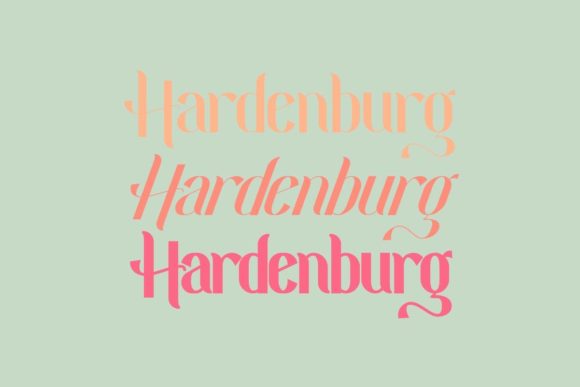
At first glance, Hardenburg presents itself as a contemporary serif display typeface. Its design language leans heavily into current trends, featuring sharp contrasts between thick and thin strokes that create a sense of elegance and sophistication. The serifs are not merely functional; they are stylized elements that add personality to each letterform. This attention to detail makes the font particularly effective for headlines, titles, and short blocks of text where impact is paramount.
The "trendy" descriptor often applied to Hardenburg refers to its ability to bridge the gap between classic serif traditions and modern minimalism. It avoids the overly ornate or vintage feel that can date a design quickly. Instead, it maintains a clean, crisp appearance that works well in both digital and print environments. Whether you are designing a luxury brand identity, a fashion editorial layout, or a tech startup’s landing page, the font’s neutral yet distinctive personality allows it to adapt to different brand voices without overwhelming the content.
However, it is important to note that as a display font, Hardenburg is intended for large-scale use. Its intricate details and high contrast may become difficult to read if scaled down too small. Professional users should reserve it for headings, subheadings, logos, and key graphical elements rather than body copy. When used correctly, however, its visual weight and rhythm command attention and guide the viewer’s eye effectively.
Technical Usability: PUA Encoding Explained
One of the most significant advantages of Hardenburg lies in its technical implementation. The font is PUA encoded, which stands for Private Use Area encoding. To understand why this matters, it is helpful to look at how fonts typically handle special characters. Standard fonts rely on Unicode mappings, which assign specific code points to letters, numbers, and punctuation. While this system is universal, it has limitations when it comes to including numerous alternate glyphs, swashes, ligatures, and stylistic sets within a single file without bloating the file size or causing compatibility issues.
PUA encoding places these additional characters in the unused section of the Unicode standard. This means that while the basic alphabet functions normally, all the extra features—such as decorative swashes, alternative letterforms, and specialized symbols—are accessed through custom mappings. For the end user, this translates to greater flexibility and ease of access. You do not need to hunt through complex OpenType feature menus to find every available variation. Instead, you can access these glyphs directly, streamlining the design process.
For freelancers and agencies working under tight deadlines, this accessibility is crucial. It reduces the friction between having an idea and executing it visually. If a designer wants to add a flourish to a specific word to emphasize a point, Hardenburg’s PUA structure makes that option readily available. This level of control allows for more nuanced and personalized typographic treatments, which can significantly enhance the overall quality of a design project.
Strengths and Practical Applications
Hardenburg shines in scenarios where visual hierarchy and brand personality are top priorities. Its strengths lie in its consistency and reliability. Once installed, the font behaves predictably across different software platforms, from Adobe InDesign and Illustrator to Microsoft Word and web design tools. This cross-platform stability is essential for professionals who collaborate with teams or hand off files to developers and printers.
Here are some specific contexts where Hardenburg proves particularly effective:
- Brand Identity Systems: The font’s unique character set allows for the creation of memorable logos and wordmarks. The availability of swashes provides opportunities for customizing initials or key letters, adding a bespoke touch to corporate branding.
- Editorial Design: Magazines, journals, and online publications can use Hardenburg for pull quotes, chapter headers, and feature titles. Its elegant serif style complements long-form reading experiences by adding visual interest without distracting from the text.
- Marketing Materials: Flyers, brochures, and social media graphics benefit from the font’s trendy aesthetic. It helps brands appear modern and sophisticated, which is particularly valuable in competitive industries like fashion, beauty, and lifestyle.
- Event Promotions: Posters, invitations, and event banners often require typefaces that convey excitement and exclusivity. Hardenburg’s dynamic forms and stylish details make it an ideal choice for announcing concerts, exhibitions, or product launches.
Flexibility in Workflow
The font’s flexibility extends beyond just its visual variety. Because it is PUA encoded, it integrates smoothly into existing workflows that may rely on older systems or simpler text editors. Users do not need to upgrade to the latest version of design software to access all features, making it a cost-effective solution for small business owners and educators who may have limited budgets for software licenses.
Furthermore, the font’s robust glyph set supports a wide range of languages and symbols, reducing the need to switch between multiple typefaces for multilingual projects. This consistency ensures that the visual tone remains unified even when content is translated or localized, maintaining the integrity of the design across different markets.
Potential Limitations and Considerations
No typeface is perfect, and Hardenburg is no exception. Its primary limitation, as with most display fonts, is its lack of utility for extended reading. Attempting to use Hardenburg for paragraphs of text will result in poor legibility and visual fatigue. Designers must be disciplined in their application, ensuring that the font is used strictly for display purposes.
Additionally, the reliance on PUA encoding can sometimes pose challenges when sharing files with clients or collaborators who do not have the font installed or are unfamiliar with PUA glyphs. In such cases, it is essential to embed the font in PDF exports or provide clear instructions on how to access the special characters. Without proper communication, there is a risk that recipients may see missing glyphs or incorrect characters instead of the intended design.
Another consideration is the font’s strong personality. While this is a strength in many contexts, it may not suit every brand. Companies aiming for a minimalist, utilitarian, or highly corporate image might find Hardenburg too decorative or expressive. In these cases, a more neutral sans-serif or a simpler serif would be a more appropriate choice. It is crucial to evaluate the font against the specific goals and values of the project before committing to it.
Who Should Use Hardenburg?
Hardenburg is best suited for professionals who value aesthetics and are willing to invest time in thoughtful typographic choices. Freelance graphic designers, art directors, and marketing specialists will likely appreciate the font’s ability to add a premium feel to their work. Entrepreneurs launching new brands can use it to establish a strong visual identity from the outset. Bloggers and publishers looking to differentiate their content can also benefit from its unique style.
For serious hobbyists and students, Hardenburg offers a high-quality resource for learning about display typography. Its extensive glyph set provides ample opportunity for experimentation and skill development. However, beginners should be cautious not to overuse the font, as its bold presence can easily overpower other design elements.
Final Assessment
Hardenburg is a well-crafted display font that delivers on its promise of being both beautiful and stylish. Its trendy design, combined with the practical benefits of PUA encoding, makes it a valuable addition to any designer’s toolkit. While it is not suitable for body text, its effectiveness in headlines, logos, and promotional materials is undeniable. By understanding its strengths and limitations, users can leverage Hardenburg to create impactful, professional-grade designs that stand out in a crowded digital landscape. For those seeking a font that elevates their creations with elegance and uniqueness, Hardenburg is a worthy consideration.