The Bold Impact of Division One: Elevating Design with Thick, Display Typography
In the crowded landscape of digital and print design, first impressions are everything. When a viewer scans a poster, a website header, or a brand logo, their eyes are drawn to weight, contrast, and presence. This is where Division One steps in as an indispensable tool for designers who refuse to blend into the background. As a cool, bold, and thick lettered display font, it offers more than just legibility; it provides attitude. It commands attention. Whether you are crafting a high-energy sports campaign, a modern tech startup identity, or a minimalist editorial layout, this typeface has the potential to elevate any creation from standard to spectacular.
Defining the Aesthetic: What Makes Division One Stand Out?
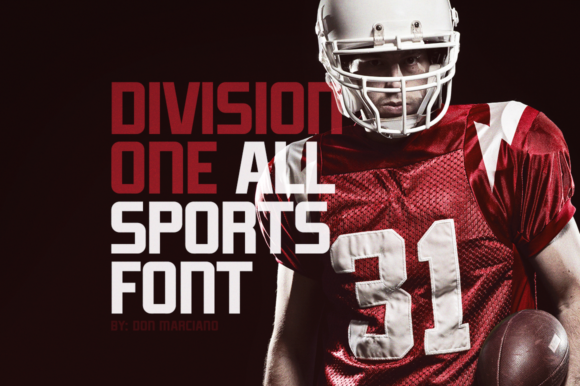
To understand why Division One is such a valuable asset to your fonts library, we must first dissect its visual DNA. The font is characterized by its substantial stroke weight and geometric precision. Unlike serif fonts that rely on delicate flourishes or script fonts that mimic handwriting, Division One is unapologetically structural. Its letters are thick, sturdy, and designed to be read at a glance.
This "cool" factor mentioned in its description isn't accidental. The design language leans towards the contemporary and the industrial. The terminals (the ends of the strokes) are often cut at sharp angles or squared off, giving the text a sense of forward momentum. This makes it particularly effective in contexts where energy and stability need to coexist. It doesn’t shout aggressively like some ultra-heavy grotesques; instead, it projects confidence. It says, "We are here, and we mean business," without needing to raise its voice.
The versatility of Division One lies in its balance. While it is undeniably bold, it maintains a clean internal rhythm. This prevents the text from feeling muddy or cluttered, even when set in large sizes. For designers, this means fewer compromises. You don’t have to sacrifice style for readability or vice versa.
Strategic Applications in Modern Design Workflows
So, how does a designer actually use Division One in a real-world project? The answer depends entirely on the hierarchy of information. Because it is a display font, it is rarely used for body copy. Instead, it serves as the anchor—the headline, the title, the key message. Here are several scenarios where this font shines:
- Brand Identity & Logos: For brands that want to convey strength, reliability, and modernity, Division One is an excellent choice. Think of construction companies, financial institutions, or automotive brands. The thickness of the letters suggests durability and trustworthiness. By using a single word or acronym in Division One, a logo can become instantly recognizable and memorable.
- Editorial Headlines: In magazine layouts or blog headers, Division One can break up dense blocks of text. Its bold nature draws the eye down the page, guiding the reader through the content. Pairing it with a lighter, more neutral sans-serif for the body text creates a striking contrast that enhances the overall aesthetic appeal.
- Digital Advertising: On social media platforms, visuals compete for attention in milliseconds. An ad featuring Division One will stand out in a feed of thin, delicate typography. The boldness ensures that the call-to-action or the main offer is impossible to miss. It works exceptionally well for limited-time offers, sales events, or product launches where urgency is key.
- Packaging Design: Product packaging is a three-dimensional canvas. Text needs to be readable from a distance and at arm's length. Division One’s thick letterforms ensure legibility even on curved surfaces or small labels. Its modern edge helps products look premium and current on crowded shelves.
The Psychology of Weight in Typography
Choosing a font is not just about aesthetics; it’s about psychology. Heavy fonts are perceived as stable, strong, and authoritative. Light fonts are seen as elegant, delicate, or airy. By selecting Division One, you are consciously choosing to communicate power and clarity.
Consider the user experience. When a visitor lands on a website with a headline set in Division One, they immediately understand the tone of the site. It feels decisive. There is no ambiguity. This reduces cognitive load for the user, allowing them to process the message faster. In an era where attention spans are shrinking, this efficiency is a significant advantage.
Furthermore, the "cool" aspect of the font taps into cultural trends. Modern design often favors minimalism combined with bold statements. Division One fits perfectly into this paradigm. It allows for ample white space around the text, creating a sense of luxury and focus. This approach is highly favored in lifestyle branding, fashion, and tech industries.
Practical Considerations for Implementation
While Division One is incredibly versatile, there are practical considerations to keep in mind to ensure it performs optimally in your projects.
Kerning and Tracking
With thick letterforms, spacing becomes critical. If letters are too close together, the negative space between them disappears, causing the text to look like a solid black block. Conversely, if they are too far apart, the word loses its cohesion. Always pay close attention to kerning (the space between individual pairs of letters) and tracking (the overall spacing of the text). Division One may require slightly wider tracking than thinner fonts to breathe properly, especially in all-caps settings.
Contrast is Key
As a display font, Division One demands a partner. Using it alongside another heavy font can create visual competition, making the design feel chaotic. The best practice is to pair it with a light or regular weight sans-serif, or even a classic serif, to create a harmonious balance. This contrast highlights the unique characteristics of Division One while ensuring the supporting text remains readable.
Context Matters
Not every project calls for boldness. If you are designing a wedding invitation or a poetry book, Division One might be too aggressive. It is essential to assess the emotional tone of the project before committing to the font. However, even in these softer contexts, a single line of Division One used as a subtle accent can add a modern twist to traditional designs.
Why Division One Belongs in Your Library
For professional designers and hobbyists alike, curating a font library is about having the right tools for the job. Division One fills a specific niche: the need for a bold, modern, and impactful display typeface that doesn’t feel dated or overly decorative. Its clean lines and substantial weight make it timeless, ensuring that designs created with it remain relevant for years to come.
Moreover, its adaptability across mediums—from screen to print, from web to merchandise—makes it a cost-effective addition. You get one font that can handle headlines, logos, posters, and digital ads. This versatility streamlines the creative process, allowing you to maintain a consistent visual identity across all touchpoints.
In conclusion, Division One is more than just a font; it is a statement. It is a tool that empowers designers to communicate with clarity and confidence. Whether you are looking to strengthen a brand identity, grab attention in a digital feed, or simply add a touch of modern boldness to a layout, this typeface delivers. By integrating Division One into your workflow, you equip yourself with a powerful asset that elevates every creation it touches. In a world filled with noise, sometimes the boldest move is to speak clearly, strongly, and with undeniable style.