Baerst Font Review: Assertive Elegance for Modern Branding
In the crowded landscape of digital typography, finding a typeface that balances distinctiveness with legibility is a persistent challenge. Designers often struggle between fonts that are too ornate to read quickly and those so generic they fail to leave a lasting impression. Baerst emerges as a compelling solution for professionals seeking an assertive, distinct, and elegant display font. It occupies a specific niche where high-impact visual hierarchy meets refined aesthetic sensibility.
This review examines Baerst not merely as a decorative asset but as a functional tool for branding, labeling, and title design. By analyzing its technical specifications, visual characteristics, and practical applications, we can determine how it fits into modern workflows for marketers, entrepreneurs, and creative directors.
Visual Identity and Core Characteristics
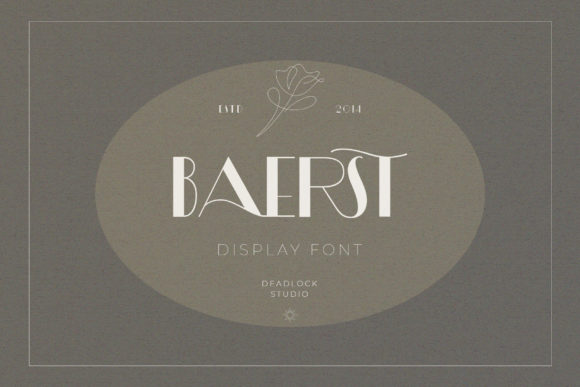
Baerst is defined by its strong personality. Unlike neutral sans-serifs or traditional serifs that recede into the background, Baerst commands attention through its unique letterforms. The term "assertive" in this context refers to the confident weight and structure of the glyphs, which provide immediate visual dominance without sacrificing clarity. This makes it particularly effective in environments where the viewer’s attention must be captured instantly.
The elegance of Baerst stems from its refined proportions and subtle detailing. While it possesses a bold presence, it avoids the heaviness that can make other display fonts feel clunky or outdated. Instead, it offers a sleek, contemporary finish that aligns well with modern design trends favoring minimalism paired with striking focal points. The contrast between thick and thin strokes, where present, is handled with precision, ensuring that the font feels balanced rather than erratic.
Key visual traits include:
- Distinct Silhouettes: Each character has a recognizable shape that aids in brand recall.
- Elegant Line Work: Clean curves and sharp angles create a sophisticated appearance suitable for premium products.
- High Legibility at Scale: Designed primarily for display sizes, it remains readable even when scaled up significantly on posters, headers, or packaging.
Technical Usability and PUA Encoding
One of the most significant advantages of Baerst for professional designers is its encoding method. The font is PUA (Private Use Area) encoded. To understand why this matters, it is helpful to look at how standard fonts handle special characters. Typically, swashes, alternate glyphs, and decorative ligatures are mapped to standard Unicode positions or require complex OpenType feature activation. In some workflows, accessing these alternatives can be cumbersome, requiring specific software settings or manual substitution.
PUA encoding places all these additional glyphs directly into accessible slots within the font file. This means that every swash, alternate, and stylistic variation is available as a direct character input. For users working in Adobe Illustrator, Photoshop, InDesign, or even web-based design tools, this translates to a streamlined workflow. You do not need to hunt through menus to find the right flourish; you simply access the glyph panel and select the desired variant.
This accessibility enhances consistency across projects. When creating a brand identity, having easy access to multiple variations of key letters allows for greater flexibility in logo construction and typographic hierarchy. It reduces the friction between concept and execution, allowing creators to experiment with different combinations of standard and decorative forms rapidly.
Practical Applications in Branding and Marketing
Given its nature as a display font, Baerst is not intended for body text. Its strength lies in contexts where short bursts of text carry the primary visual weight. Here is how it performs in real-world scenarios:
Packaging and Labels
For small business owners and product designers, packaging is often the first point of contact with a consumer. Baerst’s assertive yet elegant style makes it an excellent choice for product labels, especially in industries like cosmetics, artisanal foods, spirits, or luxury goods. The font’s ability to convey quality through its refined lines helps elevate the perceived value of a product. On a shelf, amidst competitors using more common typefaces, Baerst can help a brand stand out due to its distinctive character shapes.
Brand Identity Systems
Entrepreneurs launching new ventures often need a logo or headline that communicates their brand’s core values immediately. If a brand wants to project confidence, sophistication, and uniqueness, Baerst provides a solid foundation. Because of the extensive swash options available via PUA encoding, designers can create custom logotypes that feel bespoke. A single wordmark can be constructed using a mix of standard glyphs and strategic swashes to create a unique signature that is difficult to replicate.
Editorial and Digital Headers
Bloggers, publishers, and educators who produce high-quality visual content can use Baerst for article titles, section headers, or promotional banners. In digital media, where screen real estate is limited, a strong display font ensures that headlines are readable and engaging. The font’s elegance prevents it from feeling too aggressive for educational or informative content, striking a balance between authority and approachability.
Evaluation of Quality and Long-Term Value
When assessing any typeface, long-term viability is as important as initial appeal. Baerst demonstrates a level of craftsmanship that suggests durability in design trends. Its elegance is timeless enough to avoid looking tied to a fleeting fad, while its assertiveness ensures it remains relevant in competitive markets.
The consistency of the font family is another positive indicator. A good display font should maintain its character across different weights and styles if offered. Even as a standalone display typeface, the internal consistency of stroke width and x-height contributes to a professional finish. There are no awkward gaps or inconsistent spacing issues that might detract from the overall presentation.
However, users should be mindful of the limitations inherent to display fonts. Baerst is not versatile enough for long-form reading. Attempting to use it for paragraphs will result in reader fatigue and poor user experience. Its value is realized only when used sparingly and strategically. Professionals must pair it with simpler, highly legible sans-serif or serif fonts for supporting text to create a balanced composition.
Audience Fit and Workflow Integration
Who benefits most from incorporating Baerst into their toolkit?
- Freelance Graphic Designers: Those needing a reliable, distinctive font for client logos and marketing materials will appreciate the ease of access provided by PUA encoding. It saves time during the iterative design process.
- Small Business Owners: Individuals managing their own branding can use Baerst to create professional-looking assets without hiring expensive typographers. The ready-made swashes allow for creative customization that looks custom-designed.
- Marketers and Content Creators: For social media graphics, email headers, and ad creatives, Baerst offers the visual punch needed to stop scrolling. Its elegance ensures that campaigns feel polished rather than amateurish.
- Educators and Publishers: Those producing course materials, eBooks, or printed guides can use Baerst for chapter titles and key concepts, adding a layer of visual interest that keeps learners engaged.
For serious hobbyists and bloggers, Baerst adds a touch of professionalism to personal projects. It elevates simple layouts, making them appear more curated and intentional. This is particularly useful for portfolio sites or online stores where aesthetics play a crucial role in conversion.
Final Considerations
Baerst stands out as a purpose-built tool for designers who prioritize impact and refinement. Its combination of assertive styling and elegant detailing addresses a common pain point in typography: the trade-off between visibility and beauty. The PUA encoding removes technical barriers, making it a user-friendly option for both novice and experienced designers.
While it is not a universal replacement for body text fonts, its role as a specialist display typeface is executed effectively. It works best when integrated thoughtfully into broader design systems, complementing neutral fonts rather than competing with them. For anyone looking to strengthen their visual communication through strong, memorable typography, Baerst offers a robust and stylish solution.
Ultimately, the decision to use Baerst depends on the specific needs of the project. If the goal is to create a strong, elegant visual statement on labels, titles, or branding elements, this font delivers on its promises. It provides the tools necessary to craft designs that are not only seen but remembered, offering tangible value to professionals aiming to elevate their visual identity.