Evaluating Chartenz: A Practical Guide to Vintage Display Typography
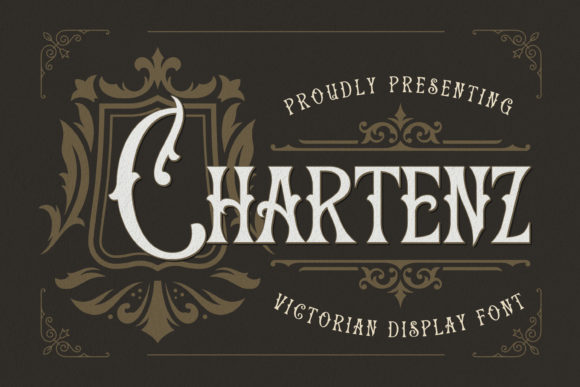
Selecting the right typeface is rarely a matter of simple preference; it is a strategic decision that influences readability, brand perception, and visual hierarchy. When designers encounter Chartenz, they are often faced with a distinct aesthetic choice that diverges significantly from modern minimalism. This font presents itself as a thick-lettered, vintage-styled display typeface characterized by its bold weight and historical resonance. For professionals in graphic design, branding, and print production, understanding the specific utility and technical constraints of such a specialized font is essential before integrating it into a project.
This analysis explores the functional characteristics of Chartenz, its technical encoding advantages, and how it compares to broader categories of display typography. The goal is to provide a balanced evaluation for those deciding whether this tool fits their specific creative requirements.
Understanding the Visual Identity of Chartenz
At first glance, Chartenz commands attention through its substantial stroke width and retro-inspired geometry. It belongs to the category of display fonts, which are designed to be read at large sizes rather than in extended body text. Unlike serif or sans-serif fonts optimized for paragraphs, display fonts rely on character, mood, and stylistic flair to communicate a message quickly. Chartenz leverages this principle by evoking a sense of nostalgia, strength, and tradition.
The "vintage" descriptor in its classification refers to its structural roots. The letterforms likely draw inspiration from early 20th-century advertising, circus posters, or industrial signage. These styles were historically developed to grab attention from a distance, using high contrast and exaggerated proportions. In a contemporary context, Chartenz serves as a bridge between past aesthetics and modern digital layouts. It allows designers to inject personality into headers, logos, and poster art without resorting to clichéd or overused decorative fonts.
However, the boldness of Chartenz introduces inherent tradeoffs. Its thickness reduces the amount of white space within each character, which can impact legibility if scaled down too small. Consequently, it is ill-suited for long-form reading. Instead, it thrives in environments where brevity is key: headlines, titles, packaging labels, and social media graphics. Recognizing these boundaries is the first step in determining if Chartenz aligns with your project’s needs.
Technical Advantages: The Role of PUA Encoding
One of the most significant practical benefits of Chartenz lies in its technical implementation, specifically its use of PUA (Private Use Area) encoding. To understand why this matters, it is helpful to look at how fonts store data. Standard Unicode encodings assign specific code points to common characters like A, B, C, and punctuation marks. However, many display fonts include additional glyphs—such as swashes, alternate characters, ligatures, and decorative ornaments—that do not have standard Unicode assignments.
In older or less sophisticated font workflows, accessing these extra glyphs could be cumbersome. Designers might have needed to open a separate glyph panel, search visually for each symbol, and manually insert them. This process slows down workflow and can lead to inconsistency. Chartenz addresses this friction through PUA encoding. By mapping all glyphs and swashes to the Private Use Area of the Unicode standard, the font ensures that every available character is accessible directly from the keyboard or a simplified character map interface.
This approach offers several advantages for professional users:
- Efficiency: Designers can access special characters rapidly, maintaining creative flow without interrupting the design process to hunt for symbols.
- Consistency: Because the glyphs are encoded systematically, they behave predictably across different software applications, from Adobe Illustrator to Microsoft Word.
- Completeness: Users gain confidence that they are utilizing the full extent of the font’s design potential. There is no ambiguity about missing swashes or alternate forms.
For teams working on complex projects that require frequent typographic variation, this ease of access is a tangible productivity booster. It removes the technical barrier between the designer’s intent and the final output.
Comparing Chartenz to Modern Sans-Serif Alternatives
When evaluating Chartenz, it is natural to compare it against the ubiquitous modern sans-serif fonts that dominate current web and app design. Fonts like Helvetica, Roboto, or Inter prioritize neutrality, clarity, and scalability. They are workhorses designed to recede into the background so that content takes center stage.
Chartenz operates in direct opposition to this philosophy. Where a modern sans-serif seeks invisibility, Chartenz seeks visibility. The comparison here is not necessarily about which is "better," but rather about fit for purpose. If a brand identity aims to convey innovation, speed, or technological sophistication, Chartenz may clash with those values due to its heavy, historical weight. Conversely, if the goal is to evoke craftsmanship, heritage, or bold confidence, Chartenz outperforms neutral alternatives.
Furthermore, consider the visual weight. Modern trends often favor lighter weights and generous tracking (letter-spacing) to create an airy, premium feel. Chartenz, being thick and bold, creates a dense visual block. This makes it excellent for creating strong anchors in a layout but challenging to pair with other typefaces. Designers must exercise caution when combining Chartenz with other fonts, ensuring that the secondary typeface provides enough contrast in weight and style to avoid visual competition.
Evaluating Tradeoffs and Limitations
No single typeface is a universal solution, and Chartenz is no exception. While its bold aesthetic and technical encoding are strengths, they also impose limitations that must be weighed during the selection process.
Limited Versatility: As a display font, Chartenz has a narrow range of application. It cannot serve as a primary font for body copy, footnotes, or user interface elements where small text is prevalent. Projects requiring a comprehensive typographic system will need to pair Chartenz with a highly legible companion font. This requirement adds complexity to the design process, as finding a harmonious partner font requires careful testing.
Aesthetic Specificity: The vintage style is a double-edged sword. It appeals strongly to certain demographics and industries, such as craft brewing, automotive restoration, music festivals, or artisanal food products. However, in sectors that prioritize sterility, medical precision, or corporate formality, Chartenz may appear outdated or unprofessional. The risk of misalignment with brand voice is higher with expressive fonts than with neutral ones.
Scalability Constraints: While PUA encoding helps with accessibility, it does not change the physical properties of the letters. At very small sizes, the thick strokes of Chartenz may merge, causing the text to become illegible. Designers must rigorously test the font at various resolutions and sizes to ensure it remains clear, particularly in digital contexts where pixel density varies.
Decision Framework: When to Choose Chartenz
To determine if Chartenz is the right tool for your next project, consider the following decision factors. These criteria help separate subjective preference from objective suitability.
- Context of Use: Is the text primarily used for headlines, logos, or short phrases? If yes, Chartenz is a strong candidate. If the text involves paragraphs or long sentences, look elsewhere.
- Brand Personality: Does the brand value tradition, boldness, and distinctiveness? Or does it prioritize neutrality and efficiency? Chartenz supports the former.
- Visual Hierarchy: Do you need a font that immediately grabs attention and sets a tone? Chartenz excels at establishing a dominant visual anchor.
- Technical Workflow: Do you value easy access to a wide variety of swashes and alternates without navigating complex menus? The PUA encoding of Chartenz simplifies this aspect of design.
For example, a local brewery launching a new IPA might choose Chartenz for its label to evoke a sense of old-world brewing techniques and robust flavor. The bold letters stand out on a shelf, and the swashes add a touch of artisanal detail. In contrast, a fintech startup developing a mobile banking app would likely find Chartenz inappropriate for its interface, opting instead for a clean, geometric sans-serif that conveys trust and simplicity.
Conclusion on Utility and Application
Chartenz represents a specialized instrument in the designer’s toolkit. It is not a general-purpose font but a targeted solution for projects requiring strong, vintage-inspired visual impact. Its thick lettering and bold presence make it ideal for display purposes, while its PUA encoding ensures that designers can leverage its full range of decorative features efficiently.
Success with Chartenz depends on respecting its limitations. It should be used sparingly, paired thoughtfully with complementary typefaces, and applied only when the brand narrative aligns with its historical and robust aesthetic. By understanding these dynamics, designers can move beyond trial-and-error and make informed decisions that enhance both the functionality and the artistic quality of their work. Whether adding it confidently to a favorite creation or exploring it for a new client brief, Chartenz offers a reliable path to striking, memorable typography.